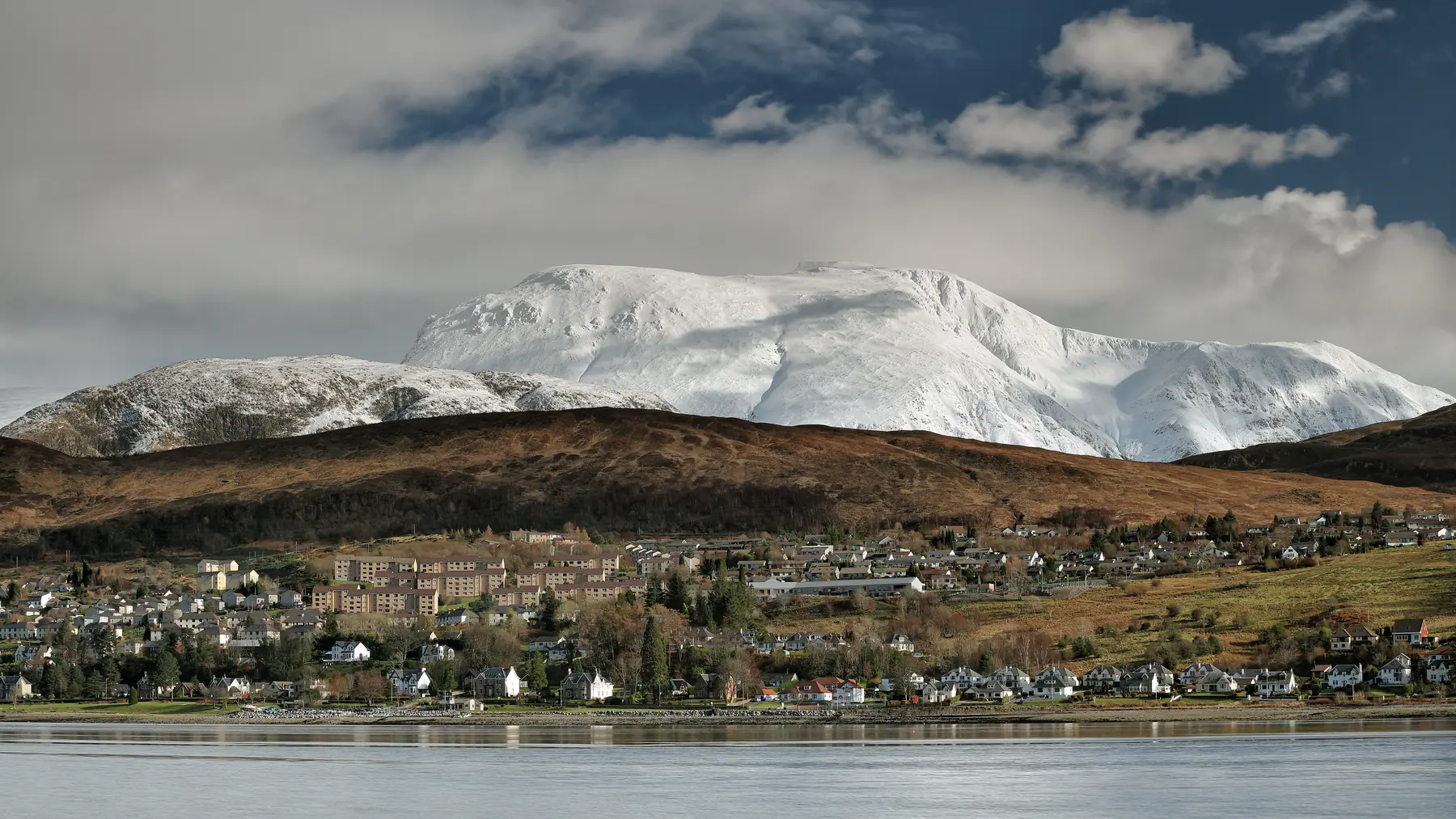
Fort William is a town where the paid attractions are a sideshow. The reason people come — the mountains, the glens, the waterfalls, the sea loch and the light on all of it — is free, and Scotland’s access legislation means you can walk almost anywhere responsibly without asking anyone.
That makes Lochaber one of the cheapest holiday destinations in Britain for anyone prepared to be outdoors, and one of the more expensive ones for anyone who is not.
The glen behind the town is free from end to end.
Steall Falls, at the head of the glen road, is Scotland’s second-highest waterfall at 120 metres, reached by an hour-and-a-half round walk through the Nevis Gorge — a wooded ravine that is one of the most dramatic short walks in Britain. Free, though the car park at the head of the road fills early in summer.
Lower Falls, further down, is five minutes from the road.
The riverside path up the glen from the visitor centre is flat, easy and free.
Dun Deardail, the vitrified Iron Age fort on the hillside above, is a two-hour round trip from the youth hostel with a view down the glen.
Ben Nevis itself is free to climb, which is worth stating plainly. It is also a serious mountain — see our Ben Nevis guide before you set off.
Neptune’s Staircase at Banavie is free to watch, and watching a yacht work through eight locks in sequence takes about ninety minutes and is more interesting than it sounds. Telford built it between 1803 and 1822 and it is the longest staircase lock in Britain.
The towpath from Corpach sea lock north-east along the Caledonian Canal is flat, surfaced and free, and forms the first section of the Great Glen Way.
The Old Boat of Caol — a beached wooden fishing boat on the shore at Caol with Ben Nevis directly behind it — has become one of the most photographed objects in Scotland. It costs nothing and takes ten minutes.
Caol beach and the shore of Loch Linnhe give you the mountain, the sea and the light, which is the whole point of being here.
The Commando Memorial at Spean Bridge, thirteen kilometres north. A bronze of three commandos on the ground where they trained during the Second World War, looking south to Ben Nevis. It is Category A listed, it is free, and the view from it is one of the finest roadside views in Scotland. There is a garden of remembrance beside it.
Old Inverlochy Castle, two kilometres north, is a thirteenth-century courtyard castle with four round towers by the River Lochy — the site of the original settlement here before the town moved south to the fort. Free to see.
The West Highland Museum on the High Street asks for a donation rather than a fixed admission at times, and is one of the best small museums in the Highlands. Check current arrangements.
The site of the fort itself, by the loch shore near the station, is a scant ruin — most of it was demolished for the railway in the 1890s — but it is free and it explains the town’s name.
The end of the West Highland Way sculpture on the High Street is where 154 kilometres of walking finishes, and watching people arrive at it is a free spectator sport with a lot of emotion in it.
Twenty minutes south, and free in its entirety. Glencoe Lochan has three waymarked trails around a small loch. The Three Sisters viewpoint and the lay-bys along the A82 through the glen cost nothing. The Glencoe visitor centre charges for parking and the exhibition but the glen itself is open. The Study, the Meeting of Three Waters and the walk into the Lost Valley are all free — the last of these being a hidden corrie where the MacDonalds hid cattle, reached by a steep and rocky hour’s climb.
Inchree Falls at Onich is a short free forest walk to a waterfall.
The Glenfinnan viewpoint — where you stand to watch the Jacobite steam train cross the twenty-one-arch viaduct — is free, though the National Trust car park is not. The Glenfinnan Monument at the head of Loch Shiel, marking where the 1745 rising was raised, is free to look at from outside.
Loch Arkaig, Loch Lochy and the Great Glen Way north are all free walking.
The Silver Sands of Morar and the beaches around Arisaig, an hour west, are among the best in Britain and cost nothing but the drive.
Worth understanding if you are visiting from England. Scotland’s access legislation gives a right of responsible access over almost all land and inland water — you may walk, cycle, ride, canoe and wild camp across the hills, forests and lochsides here without gates, permission or fees, provided you behave responsibly: no damage, no disturbance to livestock or wildlife, dogs under control, camp lightly and away from roads and buildings, and leave no trace.
It is why a week in Lochaber can cost so little, and it is a genuine privilege rather than a technicality.
Parking, mainly. Glen Nevis, Glencoe, Glenfinnan and the Nevis Range all charge, and the National Trust for Scotland car parks are free to members.
In the town itself, though, parking is unusually easy: Morrisons, the railway station, the Nevis Centre and the West End car park are all free, which is not something you can say about most Highland towns.
And the trains and buses are good. The West Highland Line from Glasgow is one of the great railway journeys in the world and costs less than driving; local buses run up Glen Nevis in season and south to Glencoe.
Walk up Cow Hill first thing for the view over the town, the loch and the mountain. Come down and take the bus or drive up Glen Nevis, walk the gorge to Steall Falls and eat lunch in the meadow below the waterfall. In the afternoon, drive or walk out to Corpach for the beached boat and the canal locks at Banavie. Finish at the Commando Memorial for the evening light down the Great Glen.
That is a full day of world-class Highland scenery for the price of a bus fare and a car park.
If the first free day covered Glen Nevis and the canal, the second should go south. Drive or take the bus to Glencoe village, walk the three trails around Glencoe Lochan in the morning, then continue up the glen with stops at the Three Sisters viewpoint and the Meeting of Three Waters. In the afternoon, climb into the Lost Valley — a steep, rocky hour up between the Three Sisters into a hidden corrie where the MacDonalds are said to have hidden stolen cattle, and one of the most atmospheric places in Scotland.
Everything on that day except the parking is free, and it takes in the most famous glen in the country.
A third free day goes west: the Glenfinnan viewpoint for the viaduct, the monument at the head of Loch Shiel, and then on to the Silver Sands of Morar and the beaches around Arisaig, which cost nothing and rival anything in the Hebrides.
Lochaber is exceptional for it and none of it charges. Golden eagles and white-tailed sea eagles are both present — the latter reintroduced and now breeding along the west coast. Red deer are on the hillsides everywhere and come down to the roadside in winter. Otters work the shore of Loch Linnhe. Pine martens and wildcats are present but rarely seen. And the sea lochs hold seals, porpoises and, in summer, basking sharks and minke whales — most of which can be seen from the shore with patience, though a boat trip improves the odds considerably.
Yes. Only the car park at the Glen Nevis visitor centre is charged. The mountain itself is open access.
Yes, and there is free parking beside it.
Yes, from the viewpoint on the hillside. The National Trust car park is charged and fills very early in summer.
Morrisons, the station, the Nevis Centre and the West End car park are all free.
Steall Falls through the Nevis Gorge, or the Commando Memorial at Spean Bridge for the view alone.