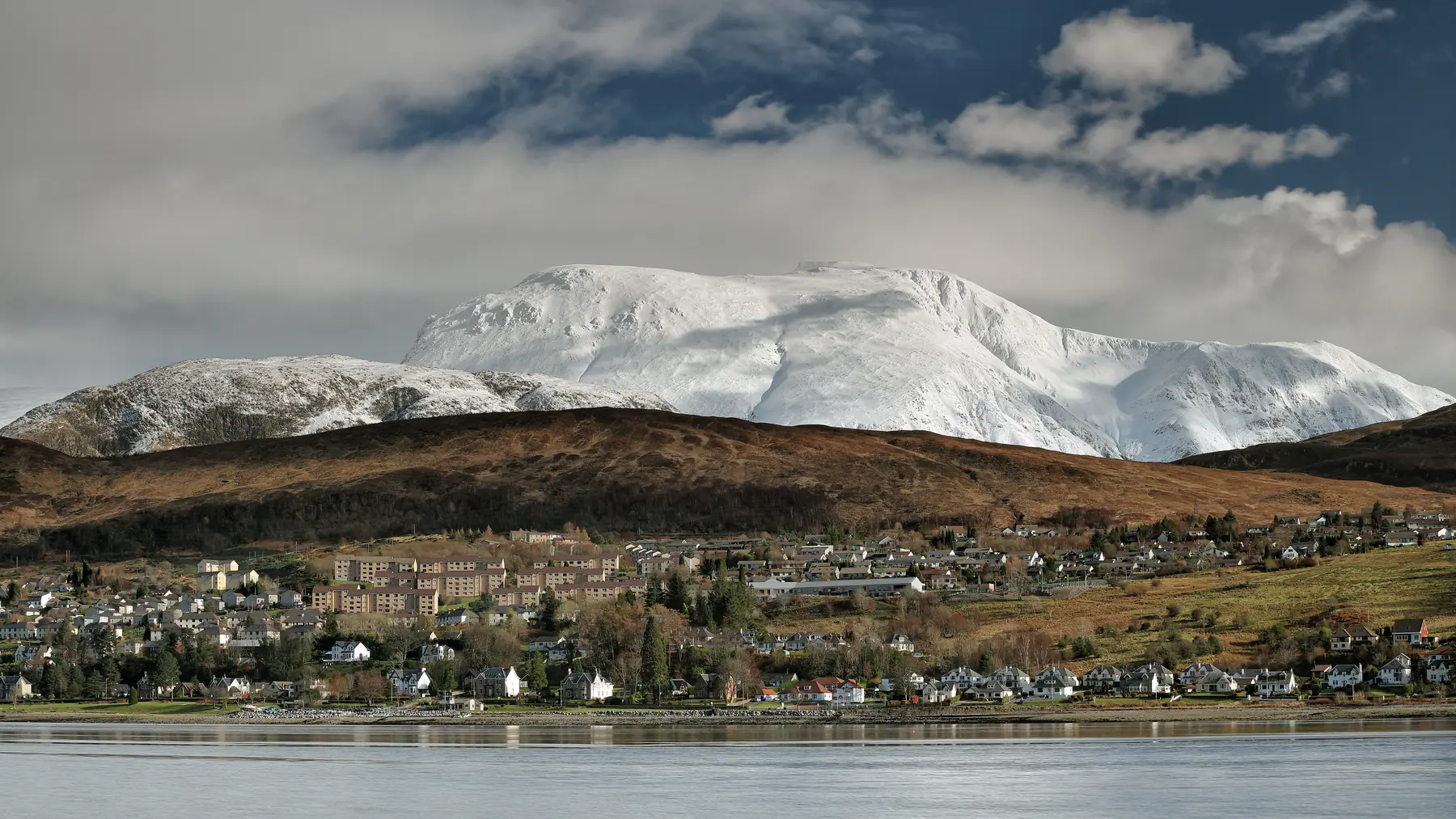
Fort William is among the wettest towns in Britain. The Atlantic weather comes in over Ardnamurchan and hits the highest ground in the country immediately behind the town, and the result is measured in metres rather than millimetres. Anyone planning a week here should plan on losing at least a couple of days to the weather, and the ones who enjoy themselves are the ones who arrived expecting to.
The consolation is real. This is a landscape that looks better under cloud than under blue sky — the waterfalls run, the glens fill with moving weather, and Glen Coe in rain is more impressive than Glen Coe in sunshine. A wet day here is not a lost day, provided you do not spend it trying to climb a mountain.
At Corpach, three kilometres out. A large private collection of gemstones, crystals, fossils and minerals displayed in recreated caves and mine workings. It is entirely indoors, it takes an hour or two, and it is the wet-weather standby for the whole of Lochaber. Expect it to be busy when the weather turns.
On the High Street, and much better than a small-town museum has any right to be. It covers the Highlands and Islands — Jacobite material including the famous anamorphic secret portrait of Prince Charles Edward Stuart, which resolves only when reflected in a polished cylinder; weapons; crofting; natural history. It is small, it is inexpensive, and the volunteers know their subject. See our West Highland Museum page.
At the foot of the mountain, three kilometres out. One of the oldest licensed distilleries in Scotland, with tours, a tasting bar, a visitor centre and a café. An hour and a half indoors, and the shop is a reasonable place to buy something to take home.
At Banavie, next to the canal. A working soap factory with a viewing area, a large shop and a good café — more interesting than it sounds and entirely dry.
The town’s leisure centre, with a swimming pool, bowling and indoor activities. It is not a tourist attraction but it is exactly what you want on day three of continuous rain with children.
Fifteen kilometres south. Three short waymarked trails around a small artificial loch, planted with North American conifers in the 1890s. The tree cover makes a genuine difference, the paths drain well, and the Pap of Glencoe reflected in the water under low cloud is a better sight than in sunshine.
Flat, surfaced and open, from Corpach sea lock past Neptune’s Staircase towards Gairlochy. Exposed, but easy going and easy to cut short.
Forest tracks under trees north-east of the town, with the mountain bike trails and walking routes at Aonach Mòr.
This is where rain helps. Steall Falls at the head of Glen Nevis, Lower Falls further down, Inchree Falls at Onich and the burns coming off the Mamores are all transformed by heavy rain. The Steall path through the Nevis Gorge is rocky and slippery when wet and needs care, but the falls in spate are one of the great sights of the western Highlands.
If the weather is genuinely foul, Lochaber has some of the best driving in Europe and you can do all of it warm and dry.
Glen Coe, twenty minutes south, is the obvious one: the A82 climbs from Loch Leven into the glen between the Three Sisters and Aonach Eagach, with waterfalls coming off both walls. In cloud and rain it is at its most Ossianic. There is a National Trust visitor centre at the top of the glen with an exhibition and a café.
The Road to the Isles, west to Glenfinnan, Arisaig and Mallaig, takes in the viaduct, the monument at the head of Loch Shiel and the silver sands of Morar. Around an hour and a half each way.
The Great Glen north to Fort Augustus and Loch Ness is an hour to the loch and gives you the canal locks at Fort Augustus at the far end.
The Commando Memorial at Spean Bridge is thirteen kilometres north and takes five minutes from the car park; the view down the Great Glen to Ben Nevis is worth it in any weather.
Lochaber’s activity operators do a substantial trade in weather that would keep walkers indoors. Canyoning and gorge walking at Inchree and around Onich are better when the water is up. White water rafting, sea kayaking on Loch Linnhe and coasteering all continue in rain, on the reasonable basis that you were going to be soaked anyway.
If you are here for a week and two days are washed out, booking one of these is a much better use of a morning than a third circuit of the High Street.
Do not go up Ben Nevis in poor visibility unless you are equipped and experienced. The summit plateau is featureless, ringed by cliffs and gullies, and the descent requires precise compass bearings that people get wrong every year. Mountain rescue in Lochaber is one of the busiest teams in Britain and the pattern is consistent. Our Ben Nevis guide is direct about it.
The same applies, in lesser degree, to the Mamores, the Aonach Eagach ridge and the high ground around Glen Coe.
Check a mountain forecast separately from the town forecast. Cloud base is the number that matters, and a base at 600 metres means the glens are fine and the tops are pointless.
Drying rooms. Most Fort William guesthouses, hostels and bunkhouses have one. It is a reasonable question to ask when booking.
Waterproof trousers matter more here than a better jacket.
Midges dislike rain and wind, which is a genuine consolation.
Fort William’s weather is best understood as several different places stacked on top of each other. The town, at sea level on a sheltered loch, is the mildest. Glen Nevis, a few hundred metres up, is wetter and windier. The summit plateau of Ben Nevis, at 1,345 metres, is a sub-arctic environment that is in cloud most days of the year and can be below freezing in July.
The number that matters is cloud base. A base at 400 metres means the glens are usable and the hills are pointless. A base at 900 means you can get up something. The Mountain Weather Information Service and the Met Office mountain forecasts both publish it for the west Highlands, along with a freezing level.
The second number is wind speed on the summits, which is routinely double what it is in the town and is what turns a walk into an ordeal.
Fort William’s High Street is pedestrianised for its central stretch, which helps, and it has enough outdoor shops, cafés and pubs to absorb an hour or two. The Wildcat and the town’s other cafés are used to people dripping on the floor. The West Highland Museum costs very little and takes half an hour. And the outdoor shops here are genuinely good, which matters if you have discovered that your waterproofs are not.
Treasures of the Earth, the West Highland Museum, the distillery and the soap company visitor centre, plus the Glen Coe drive and the waterfalls, which are better wet.
Yes. Fort William is among the wettest towns in Britain, and the mountains behind it are wetter still.
Arguably it is better — the cloud on the ridges and the water coming off the walls are what the glen is famous for.
Plenty. Glencoe Lochan, the canal towpath, the forest trails and the lower glen are all fine. The tops are not.
Treasures of the Earth for size, the West Highland Museum for interest.